Mr. Ramsay and James’s Relationship
To the LighthouseMr. Ramsay and James’s Relationship moves from childhood disappointment and sustained antagonism toward a narrow, consequential moment of recognition on the later voyage to The Lighthouse. James’s struggle is not only against his father’s demands: as he gradually understands, it is also against a force of authority that seems to overtake individual choice. His father’s brief praise does not erase that conflict, but it gives James something he has long wanted and changes the terms on which the two can see one another.
Early Disappointment and Its Afterlife
As a child, James asks whether the family will go to The Lighthouse the next day. Mrs Ramsay tells him not tomorrow, but soon, on the next fine day. She knows the promise cannot undo the disappointment: she feels angry with Charles Tansley, with Mr Ramsay, and with herself for having raised James’s hopes. The episode establishes the emotional stakes of the excursion before it becomes an actual journey. For James, the destination is bound up with expectation; his father’s part in denying or postponing it helps make that expectation a source of enduring grievance.
Years later, when Mr Ramsay announces that the family is to go to The Lighthouse, the announcement does not feel to James like a simple invitation. On the previous evening, Mr Ramsay has told Lily Briscoe that the family will be found much changed, then pressed the children to agree to the trip. James scowls, while Cam struggles to answer; Lily sees not ceremonial grief but children whose spirits have been subdued. The journey therefore begins under pressure rather than in shared eagerness. Mr Ramsay’s wish to make the excursion happen and James’s resistance occupy the same family moment, but they do not mean the same thing to father and son.
The Voyage as a Struggle Over Authority
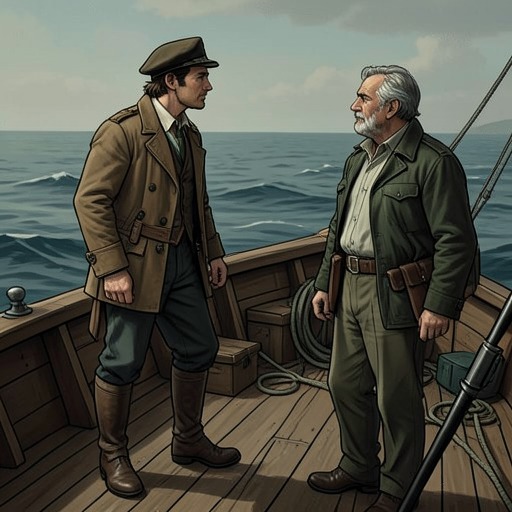
On the boat, James steers while Cam sits at the bow and Mr Ramsay sits between them. When the sails hang slack, Mr Ramsay fidgets and speaks sharply to Macalister’s boy, who begins rowing. James and Cam believe their father has made them come against their wills; they hope the calm will thwart him and force the boat back to shore. Their silent compact to stand together and resist tyranny gives James’s resentment a shared, organized form. The children do not voice their opposition to their father, but their silence is not consent.
When the wind rises and the boat moves forward, Mr Ramsay visibly relaxes. The change in the boat’s progress brings relief to him, while James and Cam remain conscious that the outing was imposed on them. Their father’s impatience with delay also keeps James under responsibility: he must watch the sail, because if he lets it slacken, the boat slows and Mr Ramsay may rebuke him. The voyage thus makes their disagreement practical as well as emotional. James is required to help carry out the journey he had resisted, while his father’s expectations remain present in the small demands of steering and attention.
Anger, Fear, and the Image of Tyranny
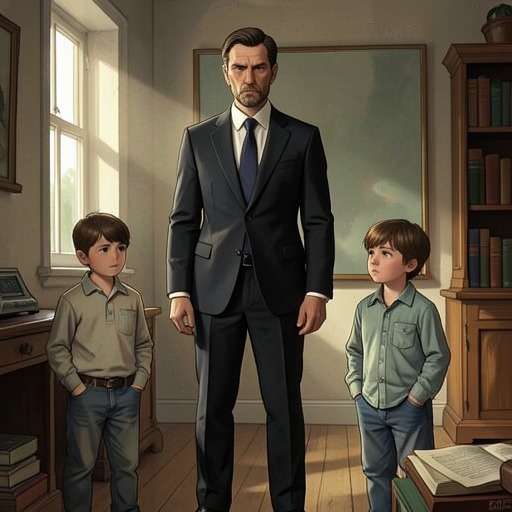
During a later lull, the boat stops far from shore and The Lighthouse. Mr Ramsay reads a small, shiny book whose covers are mottled like a plover’s egg. James interprets each turn of the page as directed at him, and fears that his father will look up and speak sharply. In that tense pause, he imagines taking a knife and striking his father to the heart. The thought is presented as an old symbol of rage, not as an action: it registers how intensely James experiences the possibility of another arbitrary demand.
James’s reflection complicates the wish to attack his father. He recognizes that it may not be the old man reading whom he wants to destroy, but the oppressive force he associates with being made to do what he does not want and being denied the right to speak. He calls that force tyranny and despotism. The image of a black-winged creature that strikes and then disappears gives shape to an anger that can outlast any one incident: Mr Ramsay may seem sad, reasonable, or generous at another moment, yet James cannot predict when the next command will come. This recognition does not settle their conflict, but distinguishes the father from the larger pattern of authority James fears.
Praise and a Limited Reconciliation
Near The Lighthouse, Mr Ramsay finally praises James’s steering, telling him, “Well done!” Cam understands at once that this is what James has wanted. James is pleased, but he does not share his pleasure: he keeps his hand on the tiller, sits upright with a slightly sulky expression, and behaves as if he were indifferent. His reserve protects him from displaying how much the praise matters. The moment is small in outward form, yet it changes the emotional balance of the voyage: recognition comes from the father whose approval James has both resisted and desired.
The praise does not retrospectively make the journey voluntary, nor does the evidence suggest that James’s deeper objections have vanished. Instead, the scene allows pride and resentment to coexist. James can resent being compelled, understand his father as part of a more general force of domination, and still value a direct acknowledgment of his competence. Their relationship ends this episode not in complete reconciliation but in an opening: Mr Ramsay recognizes what James can do, and James receives that recognition without surrendering his independent judgment.